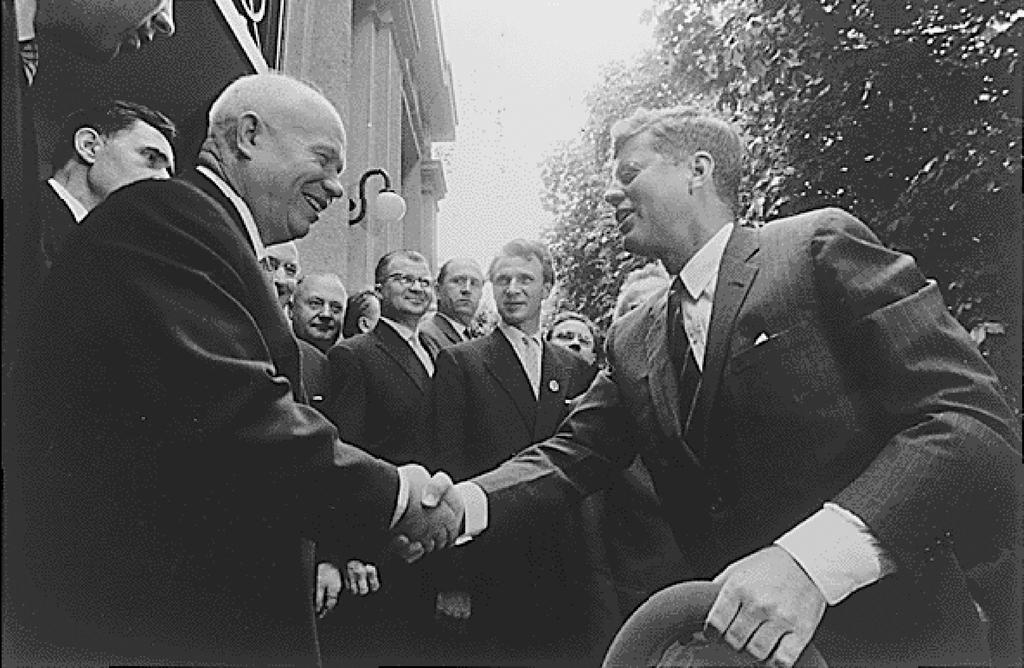
The growing gulf between capitalism and communism in Berlin led to concerns amongst the Soviet leadership. What action did Khrushchev take to solve this in 1958, and how did the USA respond?
Key Words:
Ultimatum = A demand that must be met by a certain point of time. If it is not met, there are consequences.
Brain drain = When lots of skilled workers move out of a country, it leads to a shortage of skilled people to do work in that country. This means that the country is suffering from a brain drain.
The situation in Berlin by 1958
As we have previously seen, Germany and its capital were both divided between East and West since the Yalta Conference in 1945. Berlin was in a difficult geographical location for the West as it was located deep inside the Soviet zone of Germany. Stalin used this to his advantage and had ordered the Berlin Blockade in 1948. The failure of this blockade led to the formation of West Germany and West Berlin, and the USA had successfully kept both regions under their influence. Both West Germany and West Berlin remained capitalist areas that were thriving under Marshall Aid.
Throughout the 1950s, both West Berlin and East Berlin developed in very different ways. West Berlin received Marshall Aid and was doing well under capitalism. However, the policies of Comecon in East Berlin slowed down growth in the region and the standard of living did not improve much in the area.
There was no border between East Berlin and West Berlin, and people within the city quickly understood that standards of living were better within the West. It became clear that:
- People in West Berlin were wealthier, in general, that people in East Berlin.
- There was greater freedom of speech within West Berlin.
- There were fewer goods to purchase in East Berlin.
Western radio stations also broadcasted to East Berlin, spreading propaganda in favour of the West and the better standard of living under a capitalist system.
Without any border stopping them from moving, an estimated 2.7 million East Germans left for West Germany between 1949 and 1961. The majority of these people were skilled workers that could find much better pay in West Germany. This resulted in East Berlin experiencing a ‘brain drain’, and soon began to have a shortage of skilled workers needed to work in the region. This hurt the East Berlin economy. Furthermore, it humiliated the USSR and Khrushchev – people were obviously choosing a capitalist lifestyle over a communist one, and this was dangerous for the USSR. It could start a wave of protests amongst the satellite states for better rights and living conditions if they found out.
Khrushchev announces his Berlin Ultimatum
Angered by the movement of so many East Berliners, Khrushchev gave a speech in Moscow in November 1958 giving the West an ultimatum. In his speech he demanded that:
- Western troops should be removed from Berlin.
- Berlin should become a free city without a military presence. It should also be controlled by the USSR.
- The Western powers should have six months to carry out this action.
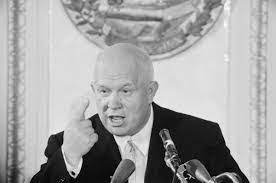
The demands made by Khrushchev were unacceptable to the USA. Eisenhower could not allow West Germany to become communist and under the control of the Soviet Union as this would break the Truman Doctrine.
The Summit Meetings of 1959-61
Between 1959-61, the leaders of the USA and the USSR met several times to discuss a way to move forward from the disagreement. They met four times: in Geneva, 1959; the USA, 1959; Paris, 1960; and Vienna, 1961. There was no agreement made to resolve the disagreement.
The Geneva Summit and Camp David (USA) Summit, 1959
– This was the beginning of the talks to resolve the disagreement.
– Nothing was agreed at the Geneva Summit in May 1959
– At the Camp David Summit in September 1959, Eisenhower and Khrushchev got on well. Khrushchev agreed to take away his Berlin Ultimatum, but no agreement was made on the future of Berlin.
The Paris Summit, May 1960
– Just thirteen days before the superpowers were due to meet at the Paris Summit, an American U2 spy plane was shot down over the USSR. The USA claimed that it was a weather monitoring plane, but photographs recovered from the plane clearly demonstrated that it was on a US spy mission.
– This led to the Summit ending in failure.
– Eisenhower refused to apologise for the spy plane, and Khrushchev walked out of the meeting.
– No agreement on Berlin was met.
The Vienna Summit, June 1961
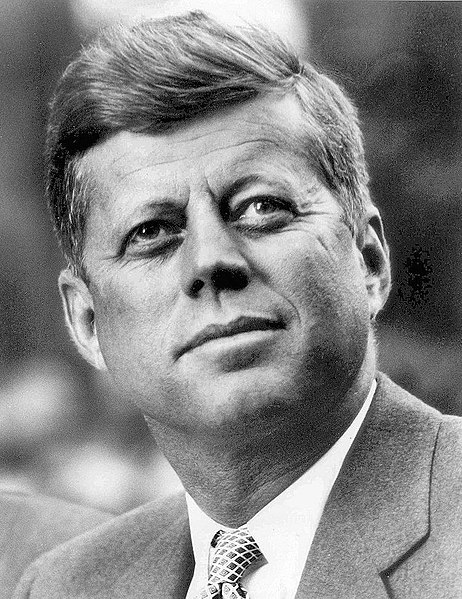
– John F. Kennedy had become President of the USA in January 1961. He was young and charismatic.
– Khrushchev believed that he would have the upper hand as he considered Kennedy to be naïve and inexperienced. He therefore demanded his Berlin Ultimatum again.
– Kennedy, however, refused to accept this, and instead pledged to increase spending on the American military by and extra $2 billion.
– The talks ended in no agreement on the future of Berlin again.
 Mr Lupton History