
The Truman Doctrine and Marshall Plan led Stalin to believe that America was setting up its own ’empire’ in Europe to challenge the USSR. To counter this, he set up Cominform and Comecon. What were these organisations, and how did they affect Superpower relations?
Key Words:
Collective farming = A Soviet method of farming. Farmers work on land that is owned by the state and all harvested food is redistributed to society.
USA foreign policy underwent a major turning point in 1947 as Truman declared his policy of containment – also known as the Truman Doctrine. For the first time, the USA became directly involved in the economic affairs of Europe by ensuring that capitalist states in Europe did not succumb to communism. The Marshall plan that followed saw $17 billion dollars of aid distributed to European capitalist countries to ensure they recovered quickly after WWII and the threat of potential communist uprisings was diminished.
The Marshall Plan was met with scepticism by Joseph Stalin, who believed that the USA was attempting to form its own empire in Europe to challenge the power of the USSR. This is what Stalin called ‘dollar imperialism‘, and he argued that the USA was trying to use its economic might to destabilise the USSR and its satellite states. Stalin felt as though he needed to respond to the Marshall Plan with his own set of measures to ensure the stability of the USSR and the newly acquired satellite states remained in tact.
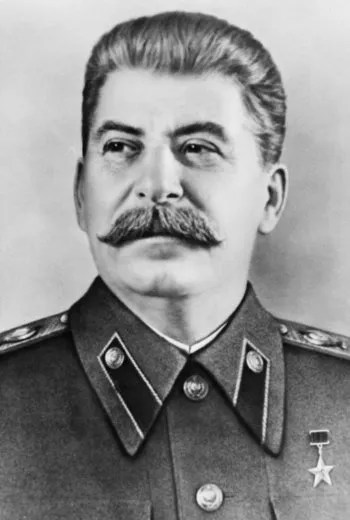
To counter the political and economic challenges posed by the Marshall Plan, Stalin introduced two new organisations for the communist countries of Europe (both the USSR and the satellite states). These were called Cominform and Comecon.
Cominform, 1947
Shortly following the Marshall Plan, Stalin set up the Communist Information Bureau (Cominform) in September 1947. Cominform was a political organisation. It had nine members – the Communist Party of the Soviet Union and all communist parties of the satellite states. This organisation…
- Ensured that all satellite states took direct orders from Moscow and followed the wishes of Stalin.
- Promoted communist economic policies, such as the state control of industry and collective farming. This resulted in the satellite states putting communist ideas into practise.
- Encouraged its members to trade with each other rather than trading with capitalist nations.
Although communist, Yugoslavia was expelled from Cominform in 1948 after its leader, Tito, had disagreements with Stalin over the leadership of the country. Yugoslavia remained communist, but was no longer a satellite state after this point.
Comecon, 1949
As money from Marshall Aid flowed into Europe, Stalin needed to develop his own form of economic assistance for the satellite states. Without doing so, it is likely that these countries would have fallen under the influence of the USA. To counter this, Stalin created the Council for Mutual Assistance (Comecon) in 1949 which, again, involved both the USSR and all satellite states. This organisation…
- Arranged trade and credit agreements between member countries.
- Allowed the USSR to plan the industries and economies of the satellite states. Each country was given a Five Year Plan and given different specialisations. For example, Czechoslovakia and Eastern Germany were encouraged to focus on heavy industry, whilst Bulgaria, Romania and Hungary were told to focus on the production of food.
- Gave the USSR access to the resources of the satellite states.
- Discouraged trade with the USA and Western Europe in favour of the USSR and other member states.
Comecon radically changed the economies of the satellite states and transformed them into communist regions very quickly. As their resources were controlled by Stalin, the quality of life did not improve in Eastern Europe as dramatically as Western Europe following the end of WWII.

Consequences of Cominform and Comecon
The Satellite States were brought under even tighter Soviet control
A core feature of both Cominform and Comecon was that they sought to reject the Marshall Plan and keep the Satellite States away from USA influence. Both plans tightened Soviet power in these nations, ensuring that Moscow made every decision in Eastern Europe and rapidly transformed the countries into fully-fledged communist states.
The USSR strengthened its position as a superpower
Having direct political and economic control over the Eastern European countries gave Stalin even greater power. Ensuring that all resources could be controlled and planned by Stalin allowed the USSR to be able to produce goods more easily and efficiently, leading to increased power.
The West became more concerned over the power of the USSR
Having direct political authority over the Satellite States meant that the West became far more concerned with the ability of Stalin to raise larger armies and develop more industry geared for weapons. The West created a military defence organisation (NATO) in 1949 to help defend themselves against any potential Soviet attacks.
Exam-style questions based on this content
Explain two consequences of the formation of Cominform, 1947 and Comecon, 1949 [8 marks]
Explain the importance of the formation of Cominform and Comecon in the development of the Cold War [8 marks]
 Mr Lupton History